In science, the word “breakthrough” is often used to describe the field’s most important advances.

From Breakthrough to a New Frontier
Philanthropy is helping Penn researchers unlock novel treatments for diseases using mRNA technology
Summer 2024
The word itself, however, can be a bit misleading. The breakthrough is almost never the result of a single moment of inspiration; nearly every innovation comes from years—or even decades—of methodical research that painstakingly uncovers new ways to understand the world.
Penn Medicine researchers Katalin Karikó and Drew Weissman did that hard work. Since the late 1990s, Karikó and Weissman had been exploring how to safely use messenger RNA (mRNA) to create vaccines and new treatments for diseases. Their research didn’t gain much traction until the COVID-19 pandemic. Suddenly, the world needed new vaccines—quickly. Karikó and Weissman’s discoveries were the blueprint for creating the mRNA-based COVID-19 vaccines that were credited with saving millions of lives, and, in 2023, they were awarded the Nobel Prize in Physiology or Medicine.
Their decades of research changed the world when it was most needed. And now, from that seed of knowledge, mRNA is poised to continue changing the world.
In 2022, Penn launched the Institute for RNA Innovation and in November 2023 opened its facility at One uCity Square. Directed by Weissman, the Roberts Family Professor in Vaccine Research, and Co-Directed by James Hoxie, Emeritus Professor of Medicine and former Director of the Penn Center for AIDS Research, the Institute is a hub for researchers across different fields and from various institutions who are studying the myriad ways RNA can be used for new vaccines and treatments.
With over 1,000 members, it encourages meaningful interaction between faculty members who otherwise might never connect. While it took a chance encounter at a copy machine for Weissman and Karikó to meet and begin working together, the Institute brings scientists together with intention. And not just at Penn—the Institute has a truly global reach, collaborating with over 250 other labs around the world.
We hope the institute will bring together researchers across Penn and the world to collaborate and advance basic science through therapeutic development.”Drew Weissman
Roberts Family Professor in Vaccine Research
Director of the Institute for RNA Innovation
Philanthropy—including the support of Brian and Aileen Roberts—has been a key driver for mRNA research. In addition to endowing Weissman’s professorship, the Aileen K. and Brian L. Roberts Family Foundation created the Roberts Family-Katalin Karikó Fellowship in Vaccine Development to provide support for early-career scientists in the field of immunology.
“The Penn Institute for RNA Innovation enables investigators on the Penn, CHOP, and Wistar campus to benefit from the advances and new tools that are becoming available in RNA science,” says Hoxie. “We are excited by the impact this field will have for basic, clinical, and translational research, and our campus is the ideal place to develop collaborations and resources that will make new discoveries possible.”
The years of research on mRNA have yielded not only vital COVID-19 vaccines, but an entirely new therapeutic platform that is changing the field of medicine. Researchers are working quickly toward treatments for some of today’s most prevalent diseases, such as cancer and heart disease. And scientists are looking for new uses for mRNA technology every day.

Hover mouse or hold your finger on the image above to read.
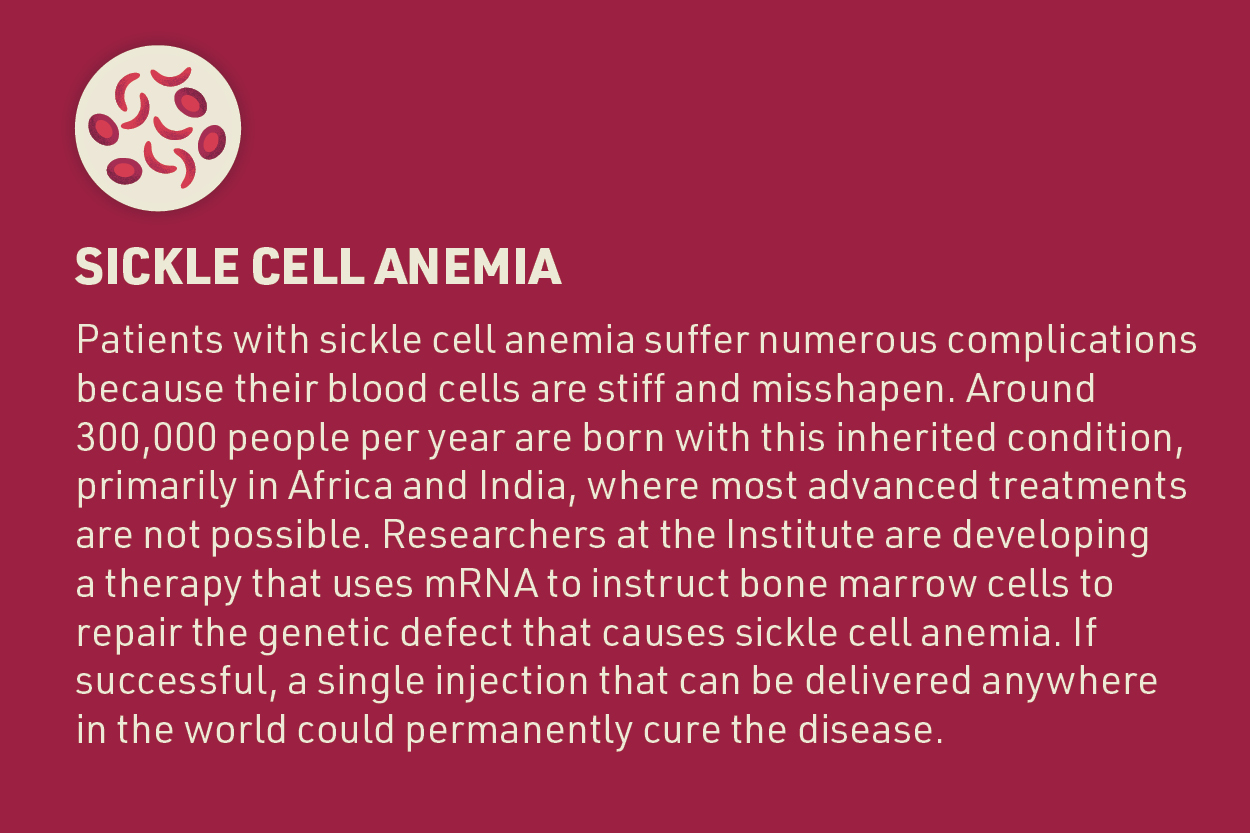
Hover mouse or hold your finger on the image above to read.
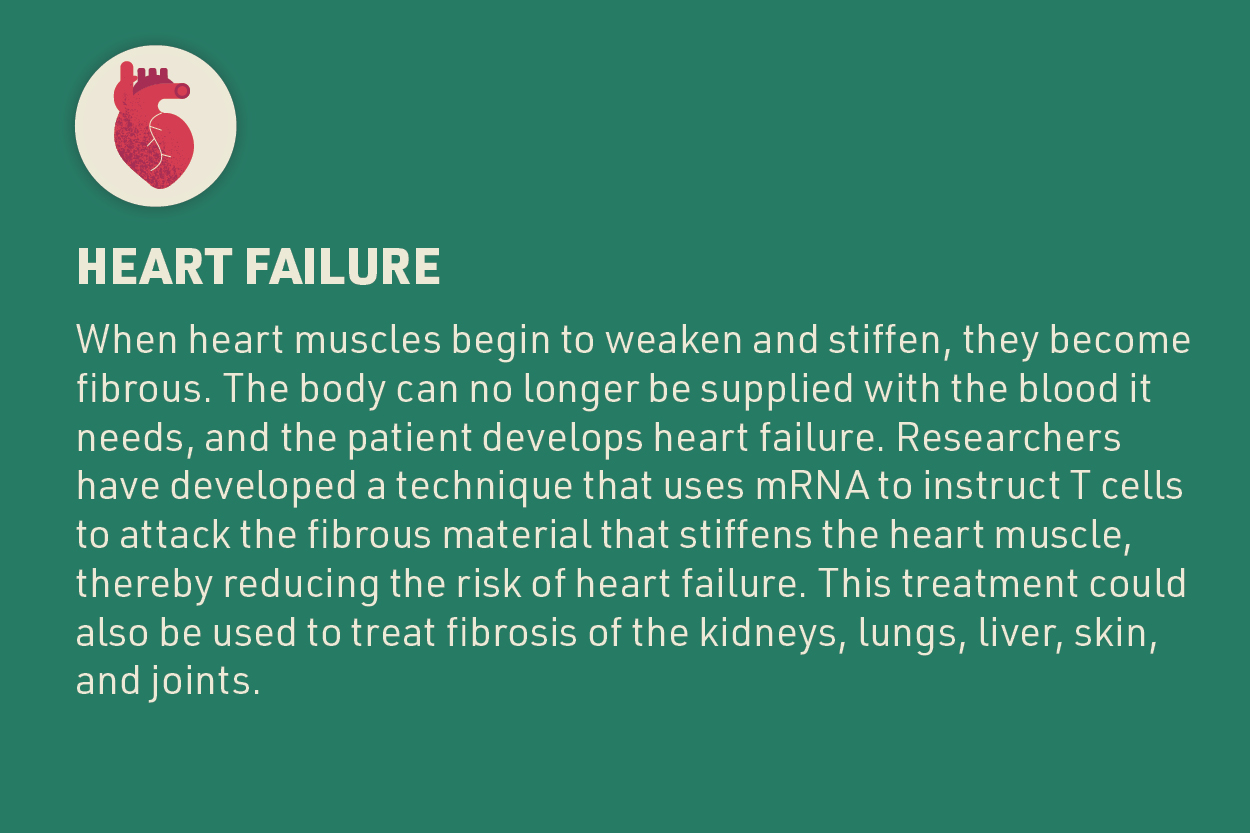
Hover mouse or hold your finger on the image above to read.

Hover mouse or hold your finger on the image above to read.
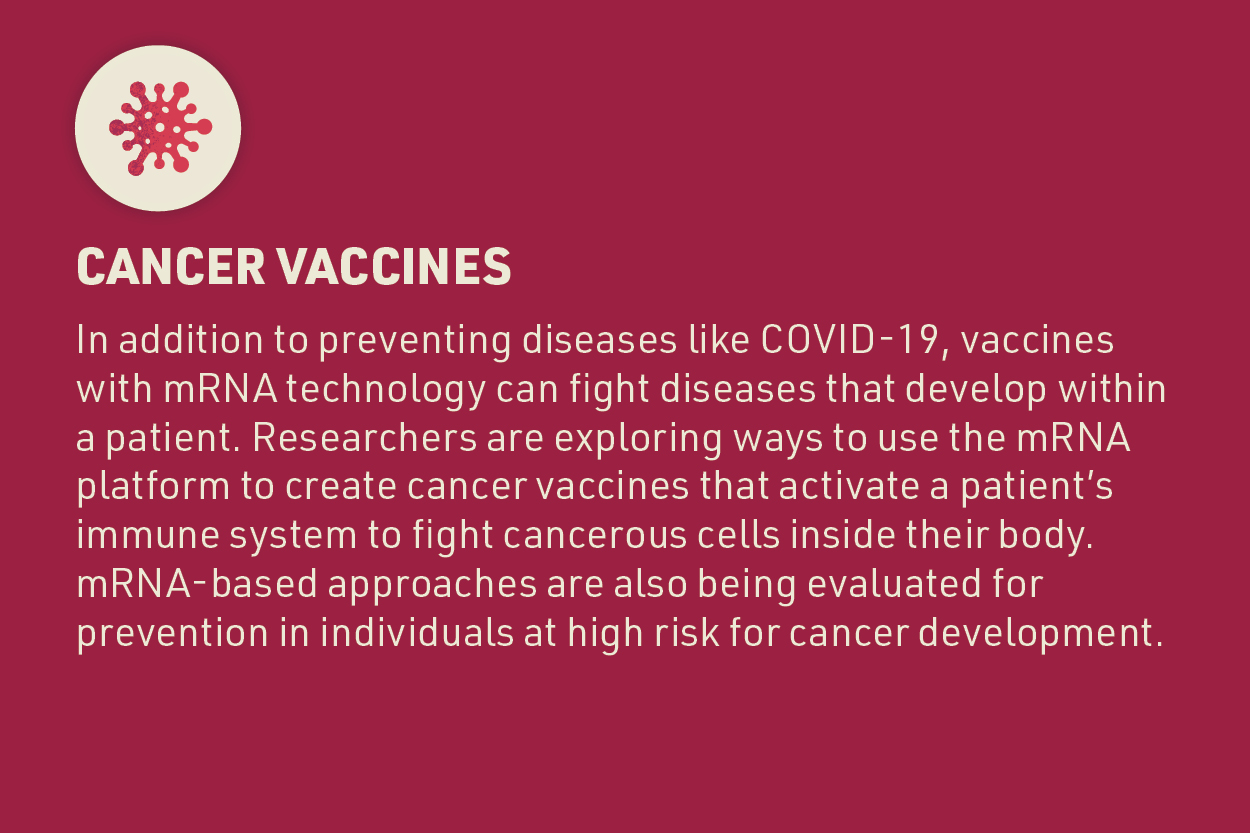
Hover mouse or hold your finger on the image above to read.
“RNA therapeutics represent a paradigm shift in disease treatment, providing unprecedented versatility and precision,” says Sara Cherry, John W. Eckman Professor of Medical Science and Therapeutics Group Lead at the Institute. “The collaboration among diverse RNA-focused researchers at Penn fosters innovation, promising new avenues for impactful contributions in the field well into the future. It’s a very exciting place to be.”
“The Institute for RNA Innovation has already led to many impactful collaborations amongst Penn students and faculty and serves as a magnet to recruit new faculty to Penn who bring unique expertise to our campus to enable inventive new directions of research,” adds Kristen Lynch, Benjamin Rush Professor of Biochemistry and Basic Science Group Lead at the Institute.
In addition, the Institute is working with the Annenberg School for Communication and other partners across campus to combat vaccine misinformation in the public and collaborate with governments around the world to help them affordably and sustainably manufacture their own vaccines.
The blossoming of new mRNA treatments came from years of dedicated research by Karikó and Weissman. Their breakthrough became a foundation—one that will support decades of new advances in medical science. And at the same time, in a lab somewhere at Penn, other researchers are quietly working on the next great scientific discovery, one that we won’t know about for years.
The groundbreaking advances at the Institute for RNA Innovation are powered by the support of Penn donors. To help researchers develop the next generation of mRNA therapeutics, contact Andrew Bellet at (215) 573‑0548 or abellet@upenn.edu.